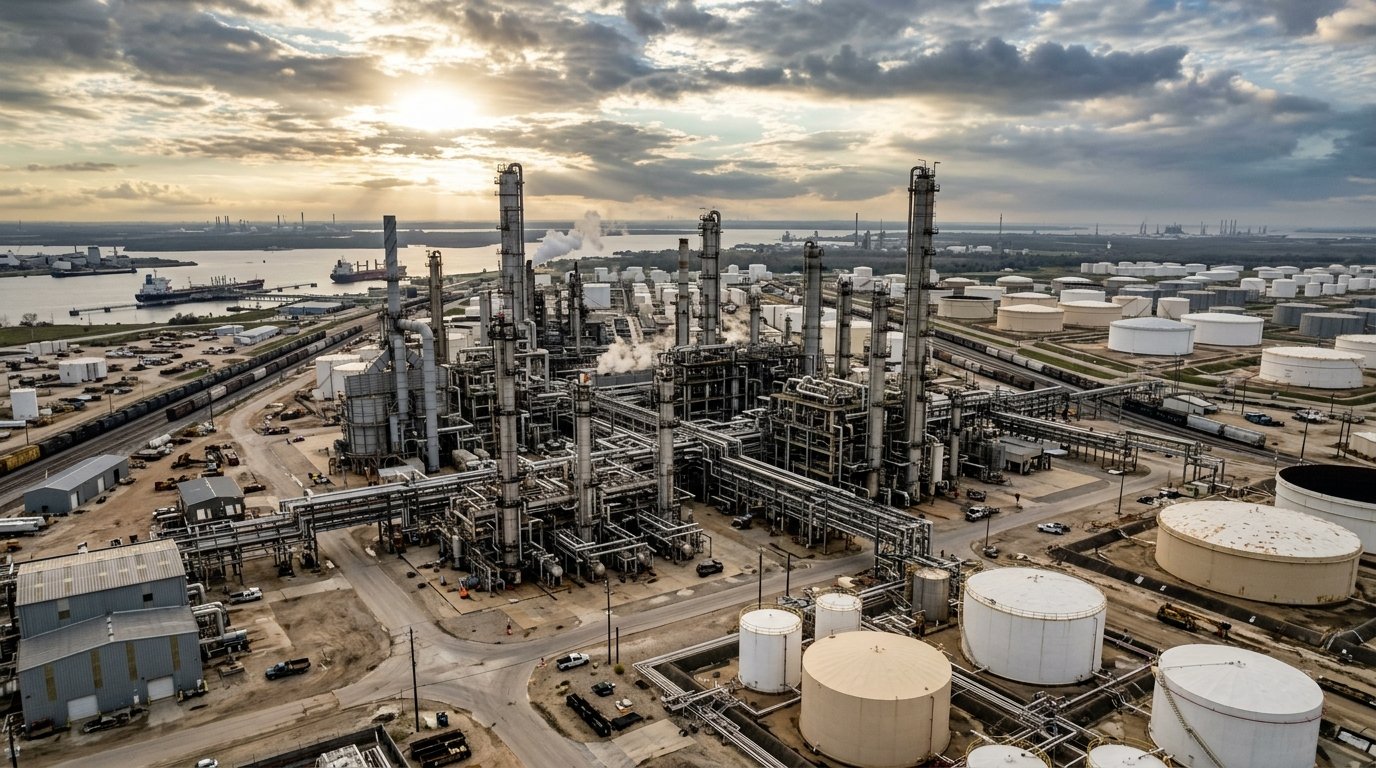
Industrial facility
Our Approach

A Structured Approach to Long-Term Asset Protection

Corrosion management works best as a continuous, structured process rather than a one-time inspection.

15+
Years of Proven Methodology
40%+
Average Downtime Reduction
100%
Audit & Statutory Compliance
15–30y
Asset Life Extension Achieved

Methodical, Science-Backed Asset Protection

Corrosion management is not a periodic checkbox. It is an end-to-end engineering discipline combining empirical materials science, predictive risk modeling, and strict international standard execution.

Empirical Metallurgy & Science

Every recommendation is underpinned by laboratory diagnostics, electrochemical characterization, and metallurgical cross-sections—eliminating guesswork from asset preservation.

Risk-Based Prioritization (RBI)

We quantify Probability of Failure (PoF) and Consequence of Failure (CoF) per API 580/581, focusing CAPEX and inspection resources on the most critical operational loops.

Full Lifecycle Custodianship

From initial design material selection and cathodic protection commissioning to operational telemetry and turnaround overhauls, we manage the entire asset lifecycle.

Strict Code & Statutory Governance

All assessments, QA/QC hold-points, and engineering deliverables rigorously adhere to AMPP (NACE), API, ASME, ASTM, and ISO international benchmarks.

The Seven-Step Lifecycle Engineering Roadmap

Each industrial engagement follows a systematic, repeatable roadmap engineered to eliminate vulnerabilities, guarantee reliability, and ensure uninterrupted production.

Step 01

Baseline Assessment & Environment Characterization

Comprehensive cataloging of facility operating conditions, fluid chemistry, thermal profiles, and historical maintenance logs.

  • Process fluid sampling (pH, chlorides, H₂S, CO₂)
  • Soil resistivity profiling and stray current mapping
  • Equipment history and degradation baseline capture
Deliverable: Baseline Corrosion Audit Dossier
Step 02

Advanced Non-Destructive Field Inspection (NDT)

Precision on-site non-invasive testing to quantify remaining wall thickness, weld defects, and hidden sub-surface anomalies.

  • Ultrasonic Thickness (UT) and Phased Array scanning
  • Close-Interval Potential Surveys (CIPS) & DCVG
  • High-voltage holiday spark testing on coatings
Deliverable: NDT Anomaly & Thickness Map
Step 03

Root-Cause Analysis & Damage Diagnostics

Rigorous metallurgical examination to pinpoint exact corrosion kinetics, pitting mechanisms, or stress cracking triggers.

  • SEM-EDS microscopic elemental verification
  • Stress Corrosion Cracking (SCC) & HIC testing
  • Galvanic and microbiological (MIC) culture assays
Deliverable: Root Cause Failure Analysis (RCFA) Report
Step 04

Risk-Based Mitigation & Engineering Design

Formulating technically sound, cost-optimized mitigation packages tailored to specific process loops and operational constraints.

  • Quantitative Risk-Based Inspection (API 580/581)
  • Cathodic Protection current demand & anode sizing
  • Metallurgical upgrade & lining specifications
Deliverable: Engineering Specification & BOM Dossier
Step 05

Turnkey Execution & QA/QC Oversight

Hands-on execution oversight ensuring surface prep, coating application, and CP installation meet international standards.

  • NACE/AMPP Level 3 certified coating inspection
  • CP transformer-rectifier & groundbed commissioning
  • Hold-point inspection and milestone sign-offs
Deliverable: Turnkey Commissioning & QA/QC Release
Step 06

Real-Time Telemetry & In-Line Monitoring

Continuous surveillance of corrosion degradation kinetics to capture operational upsets before damage manifests.

  • Electrical Resistance (ER) & LPR probe telemetry
  • Non-intrusive wireless ultrasonic wall sensors
  • SCADA dashboard integration & dynamic alerts
Deliverable: Real-Time SCADA Surveillance Dashboard
Step 07 — Continuous Loop

Continuous Life Extension & RBI Re-Rating

Periodic re-calibration of Remaining Useful Life (RUL) models and inspection intervals based on live operational telemetry and inspection findings.

  • Turnaround scope optimization & interval extension
  • Fitness-For-Service (FFS) re-rating per API 579
  • Annual asset integrity compliance re-certification
Deliverable: Annual Executive Asset Integrity Certificate

The Difference: Reactive Repair vs. Proactive Integrity

Comparing the financial, operational, and safety ramifications of emergency firefighting versus Shreya's structured lifecycle management.

Conventional Approach

Conventional Reactive Model

Unplanned Emergency Firefighting
  • Detection Point Corrosion identified only after leaks, wall thinning breaches, or process pressure loss occurs.
  • Financial & CAPEX Impact Up to 10x higher costs due to emergency fabrication, rushed procurement, and hazardous spot repairs.
  • Production Availability Unscheduled plant outages, tripped pipelines, and severe contractual downtime penalties.
  • Safety & Compliance Risks Elevated risk of catastrophic hydrocarbon releases, toxic gas leaks, and regulatory fines.
  • Asset Operating Lifespan Premature equipment scrapping and frequent capital equipment replacements well before design life.
Recommended Approach

Shreya Lifecycle Integrity Model

Predictive & Continuous Preservation
  • Detection Point Micro-degradation identified months or years ahead through real-time telemetry, NDT, and modeling.
  • Financial & CAPEX Impact Predictable OPEX budgets, structured turnaround scopes, and optimized materials investment.
  • Production Availability 98%+ sustained operational uptime with maintenance integrated during scheduled planned turnarounds.
  • Safety & Compliance Risks Flawless safety records, zero uncontrolled releases, and 100% compliance with statutory audits.
  • Asset Operating Lifespan Infrastructure operational life safely extended by 15 to 30+ years beyond original design envelope.

International Codes & Standards Compliance

We operate within the most demanding global engineering codes to ensure your facilities maintain uncompromising structural integrity and statutory approval.

Corrosion Engineering

AMPP / NACE Standards

Global authority on cathodic protection criteria, protective coatings, and sour service corrosion control.

SP0169 (Pipeline CP) SP0285 (Tanks) MR0175 / ISO 15156 CIP Level 1-3
Pressure Equipment

API Standards

In-service inspection, repair, alteration, and Risk-Based Inspection for refineries and chemical complexes.

API 570 (Piping) API 510 (Vessels) API 653 (Tanks) API 580/581 (RBI)
Mechanical & Piping

ASME Codes

Rules for construction, pressure boundaries, pipeline transportation systems, and piping stress criteria.

Sec VIII (Boilers/Vessels) B31.3 (Process Piping) B31.4 (Liquid Pipelines) B31.8 (Gas Systems)
Quality & Materials

ISO & ASTM Standards

Materials selection, laboratory corrosion testing methods, quality management, and occupational health systems.

ISO 9001 (Quality) ISO 45001 (HSE) ISO 21457 (Materials) ASTM G-Series

What You Receive: The Asset Integrity Dossier

Every consultation culminates in rigorous, audit-ready engineering deliverables that give plant managers and executives complete operational clarity.

Baseline Audit & Damage Dossier

Exhaustive physical asset register, remaining thickness scans, photographic defect logs, and environmental characterization data.

Dynamic Risk-Based Matrix (RBI)

Quantitative ranking of failure probability versus consequences across all process loops, setting precise inspection frequencies.

Turnkey QA/QC & Sign-off Package

Full material certificates (MTR), surface profile logs, dry film thickness (DFT) maps, CP polarization surveys, and warranty papers.

Real-Time Telemetry & Alarm Portal

24/7 cloud dashboard connectivity to in-line electrical resistance probes, ultrasonic loggers, and automated threshold alerts.

Apply Our Engineering Methodology to Your Facility

Schedule a technical consultation with our AMPP and API certified integrity specialists to safeguard your critical industrial infrastructure.